

Our B Corp certification is an international verification that Purcell meets high standards of social and environmental performance in all we do. It reflects our work to protect Hong Kong’s heritage places and ensure their continued relevance for local and wider communities. Through our work we design responsibly for future generations, reimagining heritage to create inclusive places where people can belong.Steve Phillips, RIBA ARB (UK) HKICON, Director of Purcell Asia Pacific Limited (Hong Kong)
When Architecture Becomes a Force for Good
In a city like Hong Kong, where heritage buildings are juxtaposed with soaring glass towers, the question of how we build—and why—has never been more urgent. For Purcell, ranked as No. 1 for Heritage in the World Architecture 100 for a fifth consecutive year, becoming a Certified B Corporation represents a significant milestone in the evolution of the practice—the latest in a series of transformative moments that includes a transition to employee ownership in 2021.

As procurement landscapes evolve, clients are increasingly scrutinizing the values and principles of their consultants. Are there partners who share similar commitments? Do they possess the credentials to support their claims? For Purcell, becoming a B Corp provided the ideal bridge—signalling to likeminded client organisations, that Purcell operates with integrity, purpose, and alignment.
“I feel there has been a shift in attitudes to collaboration, where it’s become imperative that as partners to the successful delivery of projects, we are aligned across our core values,” explains Phillips.
The results speak for themselves. Purcell (its trading name) is registered in Hong Kong as Purcell Asia Pacific Limited, where it operates under the umbrella company Purcell Architecture Ltd. The agile Hong Kong studio is independently ISO 9001 Certified, fulfilling the same quality assurance standards as achieve across the wider 300+ person organisation. This level of rigour across the practice translates to its B Corp status, where Purcell scored over 120 in 2025—more than double the global median. Their journey proves that impact is not defined by size, but by the depth of intention and the courage to lead differently.
“Captains of Our Own Ship”: A Revolutionary Ownership Model
What truly sets Purcell apart is not just what they build, but how they are built as a company. The practice transitioned to an employee-ownership (EO) structure, fundamentally reimagining corporate power. Instead of a traditional limited company with directors holding shares, Purcell Architecture Ltd is now held by an employee trust that owns the majority of the company on behalf of all employees.
“We are captains of our own ship,” Phillips says, “where embracing our company’s Collective Ambition we can collectively shape the direction of our local and regional ambitions. The more employees input and invest in the plan, the greater the potential for rewards. This goes beyond merely the potential for profit-sharing; it is supporting our legacy by empowering every employee to part of the company’s long-term future. Within our Hong Kong studio, we have continued to work on important and impactful projects that resonates across the employees, providing a working environment that supports continued learning and development. New opportunities undergo a rigorous bid, no bid appraisal to determine suitability aligned to our core values and area of expertise,” Phillips notes.

The governance structure balances freedom with accountability. The board provides strategic leadership and direction. Its trustees hold the board accountable while safeguarding long-term interests and promoting employee engagement through advocating EO values and the owner mindset across its entire staffing profile. Meanwhile, its employee councils create a vital feedback loop, taking staff views back to the Board and identifying where change is needed, where different directions could be introduced, and how innovation can be embedded into their working methods.
This structure has been fundamental to Purcell Architecture Ltd since its founding in 1947, creating a culture where architects are not just employees, they are owners, leaders, and change-makers. The fundamentals of B Corp align naturally with this practice philosophy and management approach, making certification feel less like a transformation and more like a validation of who they have always been.
Education as Strategic Investment: Building the Future
Purcell (Hong Kong’s) commitment to impacting the conservation space in Hong Kong extends far beyond its studio and project sites—it reaches into the classroom, where the future of conservation continues to evolve and the next generation of conservationists emerge.Phillips is currently in his fourth year of co-teaching at the University of Hong Kong (HKU) with a fellow colleague, Jack Chui, on the Masters in Conservation programme. This programme affords the opportunity to advocate best-practice conservation and promote a culture of working that has been the mainstay of Purcell since its founding. He also supports a similar programme at the National University of Singapore as an academic visitor. Another staff member serves on the council of the Hong Kong Institute of Architectural Conservationists (HKICON) as a link between practice, accreditation, and policy makers.
The firm also offers student placements, providing practical training opportunities that helps support future architects and conservationists in shaping their career direction. Many of their current employees, and some past, are graduates from the earlier iterations of the conservation programmes within Hong Kong, supporting a pipeline of talent that aligns with the company’s core values. Additionally, individual staff members remain active with their school alumni, where they contribute to school community projects and reinforcing the practices strong ties with academia.
Beyond formal education, the team in Hong Kong engages with the broader public through initiatives like Open House (organized by Design Trust) and government events like Heritage Vogue, where they conduct tours highlighting their projects. It is a multifaceted approach to sharing their story and giving back to the community.Teaching goes beyond community contribution; it represents a strategic imperative. “My commitment to teaching originates from personal objectives tied to giving back to a space that has rewarded me over the years. It is an opportunity to impart knowledge to the next generation of conservationists and, meet like-minded individuals who may be interested to work for us in the future,” reflects Phillips. But there is another critical benefit: engagement with fellow educators maintains awareness of changing market needs. “It helps ensure we collectively remain relevant and continue upskilling in line with advancements in conservation. It provides an opportunity to exchange in knowledge sharing with other tutors, and to learn from those who are teaching other facets of conservation that we might not actively involved with at work.“
Credits: Open House Hong Kong

By investing in education, they are simultaneously investing in their own relevance, the profession’s future, and the community culture that sustains both. Demonstrating their wholehearted commitment to being socially responsible.
The Logic of Reuse: Leading Climate Action Through Conservation
Climate action is being faced head on at Purcell today. As a business, they recognise there is a climate emergency, and they are uniquely positioned to address it through the built environment where conservation and sustainability are intrinsically linked. Since 2007, the firm has been meticulously tracking and reducing its operational emissions, making impressive progress in how it operates as a business.
But their greatest impact comes from their influence on the built environment itself. “There’s an abundance of building stock in Hong Kong that needs futureproofing and adapting to changing environmental conditions,” Phillips notes. Purcell has developed internal environmental toolkits and retrofit guidelines that support our staff navigate evolving standards and more stringent performance targets.However, the local market presents an opportunity. The legislation and drive around sustainability in Hong Kong whilst moving forward, the speed at which it moves needs to increase. Sustainability targets also lean toward new construction or projects of certain values, neither of which typically applies to our work in conservation. “So how can we make it apply?” Phillips asks.
Here, Purcell demonstrates their added value by going beyond client requirements. Even when clients do not specifically request sustainable approaches or formal accreditations, its socially conscious team, deliver projects in ways that would achieve those accreditations regardless. “We as individuals still look to deliver the project that can achieve the accreditation credits across aspects such as maximum retention of existing fabric and locally source replacement materials to match existing. We undertake robust sustainability reviews through the design process to test compliance,” Phillips explained. Recognising we are in a climate emergency, we must drive positive change across those we work with to minimise our environmental impact.
Educating Clients: The Economic Case for Heritage
Their philosophy is clear: the most innovative material is often the one that is already there. But convincing clients of this often requires education and evidence.There is a perception that sustainable architecture has a higher capital outlay. This assumption is being challenged head-on. While some innovative materials might require higher initial costs, the payback period is often modest, and the long-term benefits are far more significant.
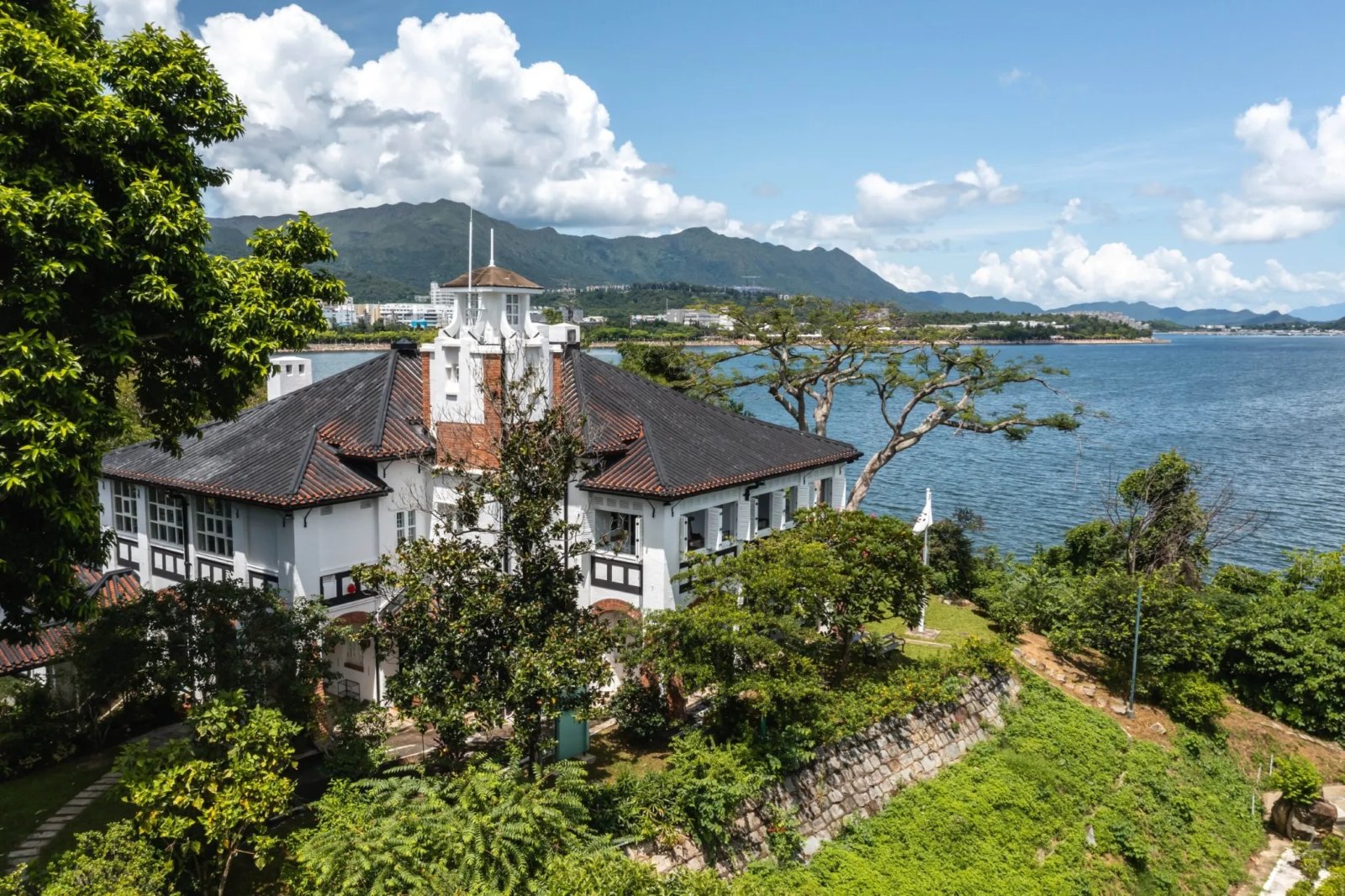

“We work in a space where the materials are already there,“ Phillips explains. His role as a conservation architect is to present compelling cases to conserve and adapt our historic building through an informed understanding of the place and presenting innovatively imaginative ways to ensure their long-term enjoyment, accessibility, and functionality for future generations.
Much of their work centres on a conservation-first mindset, through minimising change or managing it in ways that retains cultural significance. “Our role is to advise people what they have, why its matters, and what do we need to do to look after it,” Phillips notes. From this position of knowledge, we can balance conservation with necessary energy-efficient improvements that ensures our historic buildings remain fit for their intended purpose.
Balancing Architecture and Commerce
One the key approaches across Purcell (Hong Kong’s) work in the heritage and adaptive reuse space: “We let the building inform the use, not the business plan.“ While commercial feasibility studies are crucial, they work hard to frame positive outcomes the respect the buildings significance rather than letting financial projections purely drive architectural responses.
“Successful project outcomes are tied to a multi-faceted assessment,” he emphasises, ensuring a balanced response across architecture, conservation, and commercial viability. This requires more comprehensive early-stage project interrogation and robust feasibility studies that also go beyond these aspects, by extending to capture environmental and social impacts. “More understanding is needed at the early stage to ensure heritage is not seen as a barrier but as an enabler to ensure the continued relevancy of it,“ Phillips insists.
Designing for Community: The Tai Kwun Legacy and Beyond
Purcell (Hong Kong’s) flagship involvement with Tai Kwun, Hong Kong’s landmark heritage revitalisation project, perfectly illustrates their philosophy in action. It is one of the most significant and largest projects the practice had delivered at its completion, and today it continues to be a benchmark conservation project where both the innovative approaches and its lessons learnt inform our response on other projects in the region.Following the sites opening in 2018, the story did not end there. Purcell (Hong Kong) have continued to be involved with supporting their client across various commissions tied to its ongoing operations, and facilities management. This extended engagement has proven invaluable. “It’s a special project that continues to be a continual source of education and inspiration to the team,” notes Phillips.


Tai Kwun is an accessible site that has already faced real-world challenges such as operating during the pandemic where the city had no international visitors for close to three years. Yet it stands as one of the best examples of dynamic heritage management the team has experienced, with a client that is promotes continual, positive change.
Regular engagement with stakeholders, including the neighbouring community, asks a repeated question: Is what we are offering still relevant? A key example of this is where the original interpretation content has needed to evolve as—people want access to different content, so shifting a focus from the sites history to discuss societal matters such as prisoner reform. This approach proves that heritage sites must evolve in line with changing visitor needs to remain meaningful and ensure repeat visitation.
A Practice Built on Community Interface
Since its founding in the late 1940s, Purcell has always worked within the historic building environment, delivering projects that genuinely benefit communities. Much of their work sits in public and cultural sectors, meaning the public experience and engage with the projects they conserve and/or reimagine.“Many of our projects have community beneficiaries,“ Phillips emphasises. This B Corp certification aligns perfectly not only with their projects, but also with the people who work at Purcell, and its staff who are often embedded in the communities they work with.
The Missing Piece: Social Impact Studies
Looking ahead, Purcell (Hong Kong) sees an emerging need to implement mandatory social impact studies in the early stage of a project. “While specialist consultants are beginning to deliver these across the private sector, adoption in the public sector is something we feel is close to happening,” Phillips predicts.
They envision a future where projects will require mandatory community engagement, ensuring project outcomes are rooted in the place, ensuring relevancy to the intended users of the place. Too often, communities are not engaged as partners; they are simply the beneficiaries. “If you don’t have them on board from the outset, you may alienate your key audience and the long-term sustainability of the place may never achieve its full potential,” Phillips explains.

These studies should engage different community groups and the full breadth of stakeholders, with each becoming integral to projects overall direction. Broader industry change requires these studies to become mandated before seeing these routinely within tenders. Until then, Purcell (Hong Kong) continues to work with several NGOs where the conversation is naturally more oriented toward delivering socially relevant and impactful projects.
A Small Team, Massive Impact: Looking to the Future
As Purcell (Hong Kong) continues to explore opportunities in the Southeast Asian region, they stand as powerful proof that transformation does not require scale; it requires conviction. Their regional structure allows progressive practices developed in one market to benefit others, creating a global framework where innovation flows freely across borders.
Creating Client Synergies Through Shared Values
Their B Corp certification is not just opening doors; it is creating meaningful synergies with organisations that share their values, even if those clients have not pursued B Corp status themselves. Clients with similar environmental policies and ESG objectives are increasingly looking for vendors with shared goals. “Does it make us stand out? I hope it does,“ Phillips reflects.
Within client organisations’ procurement approaches, there’s growing attention to sourcing partners who align with their sustainability and social commitments. For Purcell (Hong Kong), this means being seen not just as architects, but as partners in building a better future for the city and our society. A positioning that becomes particularly valuable as larger client organisations scrutinise consultants’ backgrounds, values, and principles.
Celebrating the Achievement
The effort required to achieve B Corp certification was substantial, making it even more worth celebrating. As Phillips mentioned, “It took a lot of effort to get there. Why not celebrate it!“
For a practice where B Corp fundamentals naturally align with decades of work overcoming environmental and social issues within the historic building environment, the certification represents validation rather than transformation. Yet that validation matters—both for attracting aligned clients and for affirming to their team that their approach has always been on the right track.
Small Teams, Big Ambitions

With the local Hong Kong studio being part of the company achieving a B Corp score that more than doubles the global median—their operation adopts the same rigorous quality assurance and ISO standards as achieved across the wider 300+ person organisation—Purcell (Hong Kong) embodies their own philosophy: small teams can drive significant change when they’re captains of their own ship, steering with purpose toward a sustainable, inclusive, and heritage-rich future.Their journey proves that impact is not just about headcount or office size. It is about depth of commitment, clarity of values, and the courage to lead differently. Educating clients, investing in future generations, championing adaptive reuse over demolition, and always asking whether what they are creating serves the communities who will inhabit these spaces.

Purcell (Hong Kong) proves that the future of architecture lies not in choosing between preservation and progress, but in recognising that adaptive reuse, community engagement, and sustainable design are the most innovative paths forward. As they continue exploring opportunities in Southeast Asia, they carry forward a simple but powerful truth: the best material is often the one that is already there, and the best architecture is the kind that makes people feel they belong.
Continually Evolving
The B Corp journey certainly does not end when you acquire the certification, it is the first step. Purcell has committed to continual improvement, measured through its Annual Impact Reports, the first one of which was submitted in March 2026. Included in this is a collective plan to drive continual improvements to expand the impact it makes year on year.
“Successfully securing B Corp has proven to be an important and powerful tool for driving our targets, enabling businesses like ours to continually monitor, ever improve and become leaders in driving positive change within the communities in which we work,” Phillips concludes.
End